
Urban sustainable farming, made simple
Grow it yourself, wherever in Germany you live.
Urban Roots is a plain-language starting point for growing sustainable fruit trees & shrubs, vegetables, and keeping backyard hens, no farm, no experience, and no green thumb required.
Sustainable growing has a reputation for being complicated, expensive, or reserved for people with land to spare, and that's simply not true. Whether you have a balcony, a small backyard, or a full garden, there's a realistic, low-effort way to grow some of your own food, keep a few hens, and reconnect with the seasons, wherever in Germany you live. Fruit Trees & Shrubs, Vegetables, and Poultry below walk you through exactly what that looks like: what to expect, what actually matters, and where people usually get stuck.
Who's behind Urban Roots
Why I built this.
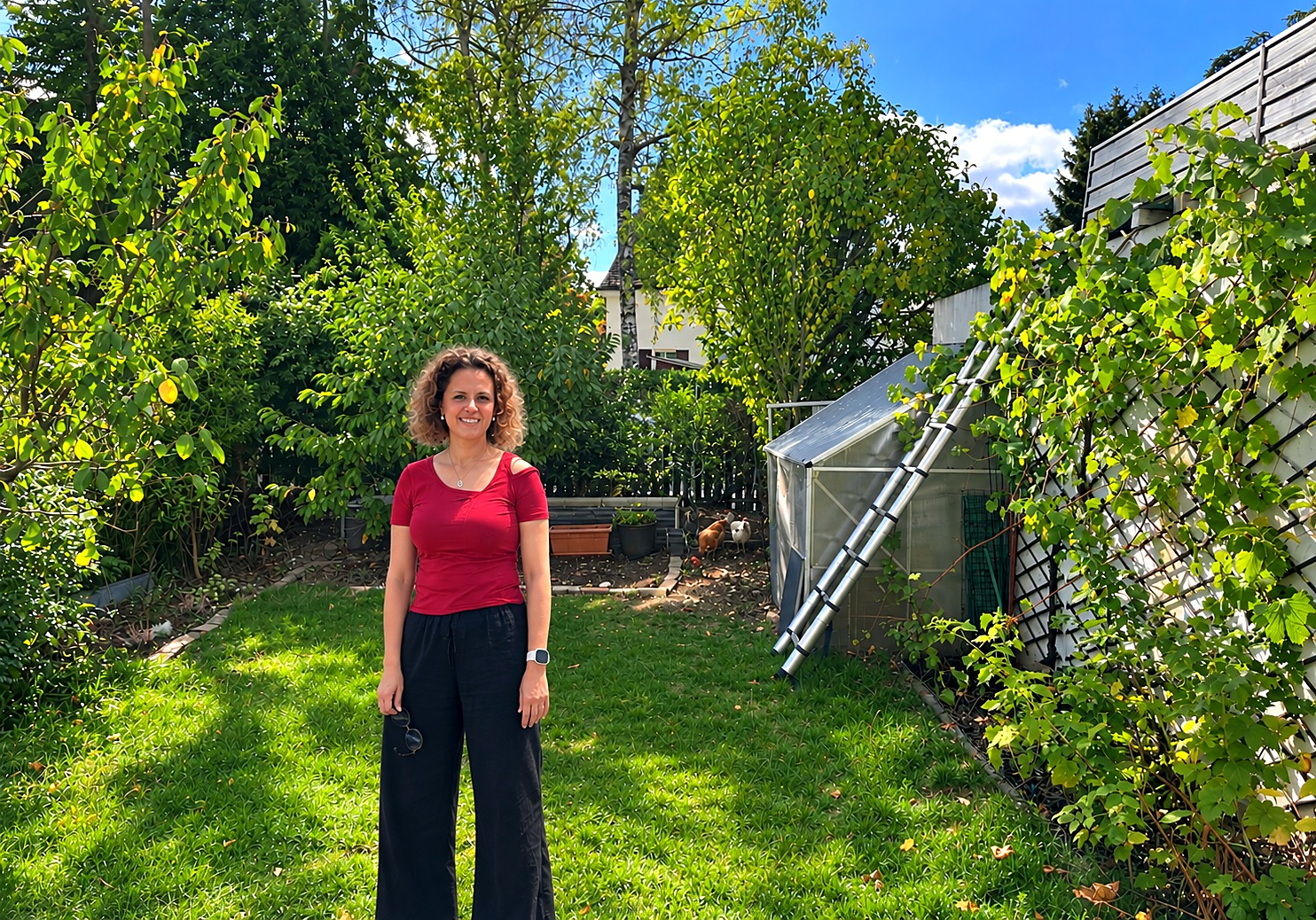
I'm Cosette Khawaja, an agricultural engineer with a background in sustainable resource management, and Urban Roots grew out of my own garden.
People who visit us see how much is growing there, fruit trees, vegetables, hens, packed into a garden that isn't especially large, and their first reaction is almost always the same: that this must take enormous effort and years of technical knowledge to pull off. It doesn't, and the questions they ask me afterwards are exactly the ones this website is built to answer.
I grew up in Lebanon, where growing your own fruit and vegetables at home is simply normal, almost every garden has something planted in it, especially fruit trees. Walking through neighbourhoods here in Germany, I noticed the opposite: a few apple trees here and there, but very little else being grown besides purely ornamental plants. That difference made me curious enough to dig into why, and what I found wasn't a real barrier, it was a handful of misconceptions, the same ones addressed throughout this site. Urban Roots is my attempt to change that.
How this works
Three steps, at your own pace.
- 1
Learn the basics
Each theme starts by clearing up the misconceptions that stop people from trying, then walks through exactly what you need, in plain language.
- 2
Start small
A short, beginner-friendly starter list per theme, the easiest vegetables, trees, and hen breeds to succeed with first.
- 3
Grow with confidence
Seasonal calendars, common beginner mistakes, and the legal basics for Germany, so you always know what to expect next.
Three ways in
Pick a theme to start with.
Each one stands on its own, start wherever interests you most, or work through all three.
Fruit Trees & Shrubs
Dwarf and columnar trees, berry bushes, and even a balcony pot, a one-time planting that pays you back for years.
Plant something lastingVegetables
The fastest, cheapest way to grow your own, from a balcony rail to a raised bed. First harvests in weeks, not years.
Start growingPoultry
Backyard hens for fresh eggs and free pest control, less daily work than most people assume, no rooster required.
Meet your future flockThe case for growing sustainably
Why grow sustainably, in the city?
Whichever theme you start with, the same underlying benefits apply.
Fresher, healthier, more sustainable food
Food eaten soon after harvest keeps more of its nutrients, vitamin C and other vitamins start breaking down the moment produce is picked, while skipping the packaging, cold storage, and food miles of a supermarket supply chain.
More green, more biodiversity
Fruit blossom feeds pollinators, hens keep pest numbers down without chemicals, and every planted balcony or garden adds a little more green to the city.
Real savings over time
A packet of seeds, a berry bush, fresh cherries, or a couple of hens costs little to start and keeps paying you back, in food, not just in enjoyment.
Genuinely good for your wellbeing
Tending something living, and stepping outside to check on it, is a small daily habit that many people find calming and grounding.
A little more self-sufficiency
Knowing where at least some of your food comes from, and being able to grow more of it, is a quietly resilient habit, wherever you live.
Before you decide
What people get wrong about sustainable urban farming.
Each theme below has its own myths worth busting, but a few doubts come up no matter which one you're considering.
“You need a big garden, or even a farm, to do this sustainably.”
A balcony, a few pots, or a modest backyard is enough to start with any of the three themes below.
“It's expensive to get started.”
The cheapest entry points, a packet of radish seeds, a single berry bush, a dwarf cherry tree, two hens, cost very little, and each guide flags exactly what's optional.
“It takes years before you see anything for the effort.”
Some results, vegetables, eggs, arrive in weeks. Even fruit trees and shrubs give a first harvest well before most people expect.
“Growing sustainably means a lot of extra work, compost, pest control, watering schedules.”
In practice it means a handful of simple, low-effort habits, covered plainly in each theme's guide, not a second job.